

How To Enable Security And Privacy Settings On Mac

Whether you just purchased a MacBook Pro or are updating your Mac operating arrangement software, it's smart to keep up with all of Apple's latest enhancements — including how new features may help or hinder your device security and online privacy.
Malware can be a threat to the security of your Mac devices and data. That might include viruses, worms, trojans, ransomware, and spyware. If yous surf the web, receive email or text letters, or lose your Mac, you could exist vulnerable. Cybercriminals use malware to proceeds control over your computer and access your personal data. They might utilize that sensitive information to commit crimes such identity theft and fraud.
You tin help protect your computer and data by learning how to secure yous Mac operating organisation and agreement any limitations.
Need help? Nosotros took a closer look at the many Mac security and firewall settings you can activate, along with other steps you can take to assistance to keep your Mac and the data on it safe and secure.
i. Require carve up user log-ins
If you lot're not the only 1 using your computer, you probably don't want others to take administrative access. Mac computers allow yous to set up separate users, requiring each user to log in. You'll have administrator log-in access, merely other people will not.
This gives other users access only to their files and settings, protecting yours as the administrator. You tin can let people who merely use your reckoner occasionally to log in equally guests. Y'all can as well create groups.
Also, consider creating and using a standard, or non-authoritative, business relationship for your ain daily activities. This could offering additional protection from sure types of malware, or at least alarm you to any suspicious action.
How to add a user:
Select the Apple menu logo > System Preferences > Users & Groups > click the padlock to unlock > enter your administrator proper name and password > click the Add button > click the New Account pop-up bill of fare > choose a type of user or group > ready upwardly the user or grouping.
2. Disable automatic login
Disabling your Mac's automated login will ensure a layer of protection if your Mac is lost or stolen.
How to disable automatic login:
Select the Apple tree carte du jour icon > System Preferences > Users & Groups > click Login options > turn off automatic login
3. Turn off your Wi-Fi connection's automobile-join feature
You don't want your computer connecting automatically to whatever Wi-Fi connexion without your knowledge and permission. A hacker could use that same service fix identifier — SSID, for curt — every bit an admission point to capture your traffic and data.
How to turn off the auto-bring together feature:
Click on the Apple tree bill of fare icon > System Preferences > Networks > select the Wi-Fi y'all want to stop joining automatically
iv. ready-your-privacy-&-security-settings for optimal protection
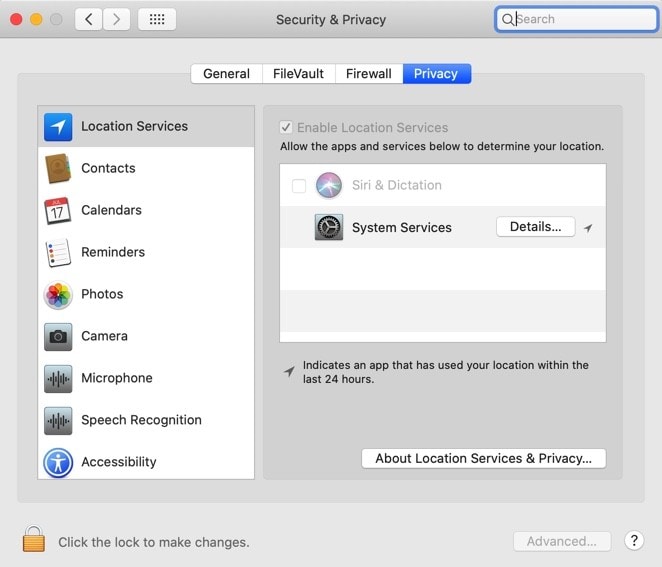
Apple's security and privacy settings offer several ways you tin enhance protection of your Mac. These settings include:
- Location Services – control which apps, if whatsoever, tin access your location data.
- Contacts – decide which apps can admission your data.
- Photos – restrict which apps can access your photos.
- Accessibility – set which apps can command your Mac.
- Analytics – prevent Apple and app developers from sharing data on your use of apps.
How to find your privacy options:
Click on the Apple tree card icon > System Preferences > Security & Privacy > Privacy > click on the settings in the sidebar that you want to audit
5. Monitor your privacy settings
Yous might sometimes install apps that are used for a short time and so end upwardly just sitting at that place, taking up space on your phone. Information technology's a good idea to periodically perform an audit of those apps. Why? They could likewise pose a security risk, as well as drain your bombardment and tedious downwards your device. Plus, sometimes privacy policies of apps change, so information technology's important to revisit apps and read the fine print.
How to monitor privacy settings:
Click on the Apple menu icon > System Preferences > Security & Privacy > Privacy. You'll find the main listing of all permissions, forth with which apps yous've granted them to. Get through them and revoke any app permissions that aren't necessary.
vi. Set up Detect My Mac
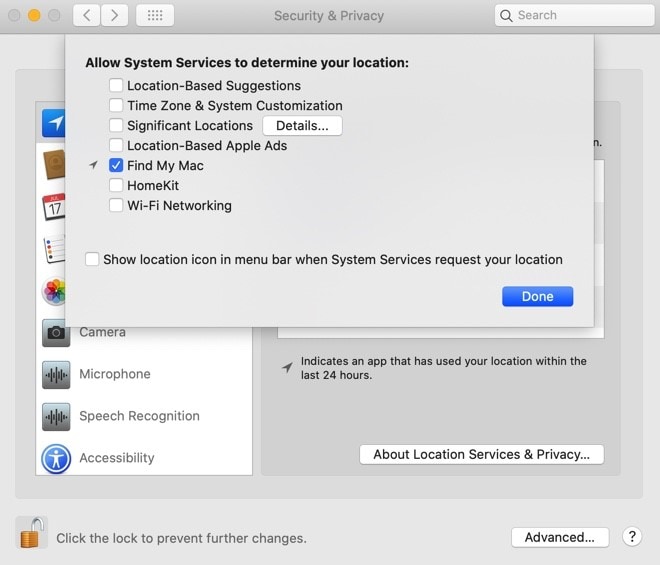
If you want to discover your Mac if it'due south lost or stolen, setting up the Find My Mac characteristic can help. Hither'southward how. You'll need to turn on Location Services (as noted above) in your privacy settings and select Find My Mac in the list of apps that tin apply your location.
Not just volition this tool aid you notice your Mac, but also it also will enable yous to wipe your bulldoze remotely your device if lost or stolen.
You'll then need to gear up upward Detect My Mac:
Click on the Apple menu icon > System Preferences > Security & Privacy > Location Services > click the padlock and enter your password > select Enable Location Services > select Find My Mac > lock the padlock to forestall further changes
7. Gear up your Safari privacy settings
The Safari browser also has privacy settings you lot can plough on to help keep your internet action prophylactic from eavesdroppers:
- New Private Window (Shift + command + Northward): enables private browsing, allowing you to browse the web without recording your visits in the History menu.
- Clear History in the Safari menu: erases cookies and other buried data in the History card.
- Privacy section in Safari'due south Preferences: helps forbid websites from tracking you lot or storing cookies on your computer.
8. Set a strong computer passcode
Cybercriminals sometimes use your passwords to access your personal data. The importance of setting stiff, unique passcodes is no big secret. Simply here are some tips to aid ensure your passcodes remain a secret:
- Don't use any personal data.
- Don't utilize your name, the names of family members, or any other identifying information.
- Don't utilise real words.
- Practice use a random combination of special characters, numbers, and uppercase and lowercase letters.
- Create longer passwords.
- Modify your passwords regularly.
- Don't reuse passwords.
- Use unlike passwords for different accounts.
- Don't enter your passwords on another person's computer or on networks that aren't yours.
nine. Use a password manager
It'southward important to create complex passwords using a unique combination of upper-case letter and lowercase letters, numbers and symbols. The trouble is that every device and application requires a new password. Information technology might be tempting to reuse old passwords or create simple and similar passwords that you'll remember, but that can make it easier for hackers to figure them out.
Enter the countersign manager. A password director can help go along your passwords organized and condom from hackers. Your business relationship information and passwords are stored in a so-chosen vault where they are encrypted. The vault stores 1 potent master countersign that gives yous like shooting fish in a barrel access to all of your accounts, while helping to maintain the privacy and security of your calculator. There are various password-director options on the market.
Another option is to apply Apple tree'south congenital-in password managing director, known as iCloud Keychain. This tool helps ready and saves your passwords in applications such as Safari, keeping your website and Wi-Fi passwords upwardly to date across your Mac and other devices.
How to fix iCloud Keychain:
Click on the Apple menu icon > System Preferences > Apple ID > tap iCloud in the sidebar > Keychain > enter your Apple ID countersign and activate the OK button > set a four-digit security code
10. Set up 2-factor authentication
When enabled, two-gene authentication, or 2FA, gives the identity verification process a second layer of security. That's because hackers will demand more than just username and password credentials to access your devices and accounts. On your Mac reckoner, this 2d layer of security consists of the biometric authentication of your fingerprint.
How to set up 2FA:
Click on your Apple menu icon > System Preferences > Touch on ID > add your fingerprint(s)
eleven.Consider using an authenticator app
Authenticator apps accept two-factor hallmark a stride further past generating unique codes right there, rather than sending them via SMS text message, which cybercriminals might intercept. Some countersign managers also offering this service.
12. Use a physical security cardinal
What'south another method of implementing 2FA? You lot could use of a physical security cardinal, or token, which is similar a smart card that provides your digital signature. Yous might consider this option if you want fifty-fifty more protection. If you have a security key, neither you nor anyone else will be able to proceeds access to your Mac without presenting your security key or token. Fifty-fifty if someone has your password, it won't do them any proficient.
13. Use a VPN
Setting upwards a virtual private network is a good mode to help ensure your internet connectedness is secure and encrypted — and condom from eavesdroppers. A VPN acts like a tunnel, encrypting data you transmit and receive while on public Wi-Fi.
How to ready a VPN on your Mac:
Cull the Apple tree menu icon > Organisation Preferences > Network > click the add together button > click the Interface pop-upwardly menu > choose VPN > click the VPN Type pop-up menu > choose the VPN you lot want to prepare upwardly > select Create button
14. Encrypt your data with FileVault

You likely accept sensitive information that you desire to protect on your computer. The Mac OS offers born disk encryption known as FileVault. Information technology encrypts your hard drive and files using 128-bit AES encryption with a 256-bit cardinal.
Why is this good? This tool gives you full-deejay encryption, protecting your files from being seen or copied. When the tool is turned on, information technology too turns on other security features such every bit Find My Mac, which allows you to wipe your drive remotely if someone steals or finds your computer. It'due south important to set a stiff password to underpin the strength of this encryption.
FileVault also lets you create a recovery key, in instance you forget your login password. It's good to proceed the recovery central in a separate location.
How to turn on FileVault deejay encryption:
Click on the Apple bill of fare icon > System Preferences > Security & Privacy > FileVault tab > click the padlock in the bottom left corner > enter your administrator name and password > click Unlock > turn on FileVault > relock the padlock
fifteen. Actuate multi-layer firewall security

Turning on your firewall for Mac offers an additional layer of protection. It can aid block unwanted inbound network connections and regulate app access to your network to keep out malware. The Mac firewall isn't enabled by default, so y'all'll accept to plow it on.
How to turn on your firewall:
Select the Apple menu icon > System Preferences > Security & Privacy > Firewall tab > unlock organisation settings past clicking the padlock at the lesser left > type in your username and password > select Plough on Firewall button > click Firewall Options > click Enable Stealth Mode > relock the padlock to foreclose further changes
Keep in mind Apple'southward built-in firewall simply offers entering protection. That means it won't terminate malware already on your Mac from connecting to the internet. That would require outbound protection.
No doubt you don't want malicious software sending out your information. What to practice? Consider multi-layer protection past running a 2-fashion firewall — that includes outbound protection — for more than comprehensive anti-malware security.
xvi. Set your app download preferences

Cybercriminals sometimes use faux apps to play a trick on you into entering your personal information and downloading malicious software. That'south why it's a adept idea to download your apps directly from Apple tree — and possibly from "identified developers." More on that below.
Apple'south App Store but accepts and offers apps it has reviewed. Information technology removes apps from its store that develop problems. Also, if you lot download and install Mac apps, plug-ins, or installer packages from outside the App shop, macOS will bank check the Programmer ID signature to ensure it'southward from an identified developer.
Information technology's smart to read an app's privacy policy. What personal information will the app collect and share with third parties? For instance, free apps oft recover costs by mining your personal data and selling it to 3rd parties. Some other consideration: How will your data exist stored and secured?
How to prepare your app download preferences:
Select the Apple carte icon > System Preferences > Security & Privacy > General > select if you want apps to exist allowed to be downloaded from the App Store or "App Shop and identified developers" known to Apple tree
17. Read reviews of apps
When yous consider an app, it tin aid to read app reviews earlier downloading. Reviews may assist y'all avoid malicious apps and ensure you're downloading a reputable app onto your computer.
18. Use circumspection when granting app permissions
Be careful before granting permissions to an app. Check to see what permissions you're actually giving. Does the app really need them? How might it employ the information? For instance, is at that place a good reason why an app might need access to your microphone, your contacts, or your social media profile?
19. Check your service sharing settings
If y'all desire to limit your sharing, information technology's a skilful idea to set your sharing preferences. The strongest protection would be to turn off sharing for all services until you demand them. These services include Screen Sharing, File Sharing, Printer Sharing, Remote Login, Remote Direction, Remote Apple tree Events, Cyberspace Sharing, Bluetooth Sharing, and Content Caching.
How to turn on and off your service sharing settings:
Click the Apple menu icon > System Preferences > Sharing > click on or off the service options in the left-manus window, and if you're assuasive a service you tin can choose to allow all users or only certain users that you list.
20. Turn off your Mac'south suggestions

By default, your Mac gives what are called Spotlight Suggestions. This data, forth with related search queries and usage, tin be shared with Apple. For more privacy, you can plough off these suggestions.
How to turn off Spotlight Suggestions:
Click the Apple card icon > System Preferences > Spotlight > Search Results tab > uncheck "Allow Spotlight Suggestions in Look up" and deselect which categories you don't want to appear in Spotlight search results
21. Turn off Siri
Siri — your Mac's intelligent personal assistant — can share your personal information, so information technology may be a expert thought to plough it off when not in apply.
How to plow off Siri:
Select the Apple menu icon > System Preferences > Siri > toggle on or off Enable Inquire Siri
22. Turn off Bluetooth
If you aren't using Bluetooth — or if you lot're most someone you don't trust — turn it off. This decreases your figurer's discoverability and adds an extra layer of privacy. It tin assistance prevent whatever potentially dangerous connections.
How to turn off Bluetooth:
Select the Apple carte icon > System Preferences > Network > Bluetooth > toggle Bluetooth to Off
23. Beware of phishing scams and pop-ups
Malware sometimes can infiltrate your Mac through mail and text messages. For instance, phishing scams involve compromised emails or text messages that seem like they're from a reputable source — similar your banking concern — but are actually simulated messages from a scammer. Phishers try to trick yous into sharing personal information by opening popular-up windows or other malicious links that ask for your personal information.
Here's how you lot tin assist protect against these online fraud schemes: Never open suspicious or unsolicited emails or attachments. Never click on them or respond to them, and never provide personal information on a website that you aren't sure is the real affair.
A good way to be sure a website is credible and secure is by always going directly to a secure "https" website on your ain — not via someone else's link.
24. Make sure automatic iOS updates are turned on
Be sure to update your apps and Mac operating system to aid keep your computer secure. Why? Security updates address software vulnerabilities. These are security holes or weaknesses in an operating system or software plan that cybercriminals could utilize to admission your data. Hackers can exploit these types of weaknesses by writing lawmaking that targets a specific vulnerability.
Security weaknesses — if they're not fixed — can let in malware, allowing a hacker proceeds control over your computer and steal your personally identifiable information. That might include everything from your passwords to your bank account information.
Cybercriminals might use your personal information to commit identity theft or financial fraud. Or they might sell it on the dark spider web for others to apply.
One contempo example that highlights the need to act immediately on security updates is Microsoft'south Windows 10 vulnerability that affects the operating organisation'southward security encryption — and could have affected hundreds of millions of Windows x users if left unpatched.
How to plough on automatic updates:
Click on your Apple tree menu icon > System Preferences > App Store > enable automated updates
25. Make certain your computer screen locks quickly when not in use

If you stride abroad from your reckoner or lose it, y'all don't want the person who finds it to be able to come across — or do — anything. Yous can set your Mac to log out when you're not using it. How? Prepare Require Passcode to Immediately. This will require you and anyone else to enter your passcode no affair how much time has passed since y'all final unlocked your estimator.
How to fix Auto-Lock:
Click on the Apple carte logo > System Preferences > Security & Privacy > click on Require Password and set it to Immediately.

More than than l million customers trust Norton with their personal information.
Your partner against cyber threats. Norton 360™ with LifeLock™, all-in-one protection against evolving threats to your connected devices, online privacy and identity.
Try Norton 360 with LifeLock. Post, bank and store from your device. We'll go on it secure.
Editorial note: Our articles provide educational data for you. NortonLifeLock offerings may not comprehend or protect against every type of criminal offence, fraud, or threat we write near. Our goal is to increase awareness about cyber rubber. Please review complete Terms during enrollment or setup. Think that no one can prevent all identity theft or cybercrime, and that LifeLock does not monitor all transactions at all businesses.
Copyright © 2022 NortonLifeLock Inc. All rights reserved. NortonLifeLock, the NortonLifeLock Logo, the Checkmark Logo, Norton, LifeLock, and the LockMan Logo are trademarks or registered trademarks of NortonLifeLock Inc. or its affiliates in the Usa and other countries. Firefox is a trademark of Mozilla Foundation. Android, Google Chrome, Google Play and the Google Play logo are trademarks of Google, LLC. Mac, iPhone, iPad, Apple and the Apple tree logo are trademarks of Apple Inc., registered in the U.S. and other countries. App Store is a service mark of Apple tree Inc. Alexa and all related logos are trademarks of Amazon.com, Inc. or its affiliates. Microsoft and the Window logo are trademarks of Microsoft Corporation in the U.Due south. and other countries. The Android robot is reproduced or modified from work created and shared past Google and used co-ordinate to terms described in the Creative Eatables 3.0 Attribution License. Other names may exist trademarks of their respective owners.

How To Enable Security And Privacy Settings On Mac,
Source: https://us.norton.com/internetsecurity-privacy-mac-security-tips-and-settings.html
Posted by: wangliturmlime35.blogspot.com
0 Response to "How To Enable Security And Privacy Settings On Mac"
Post a Comment